Civil Service Briefcases
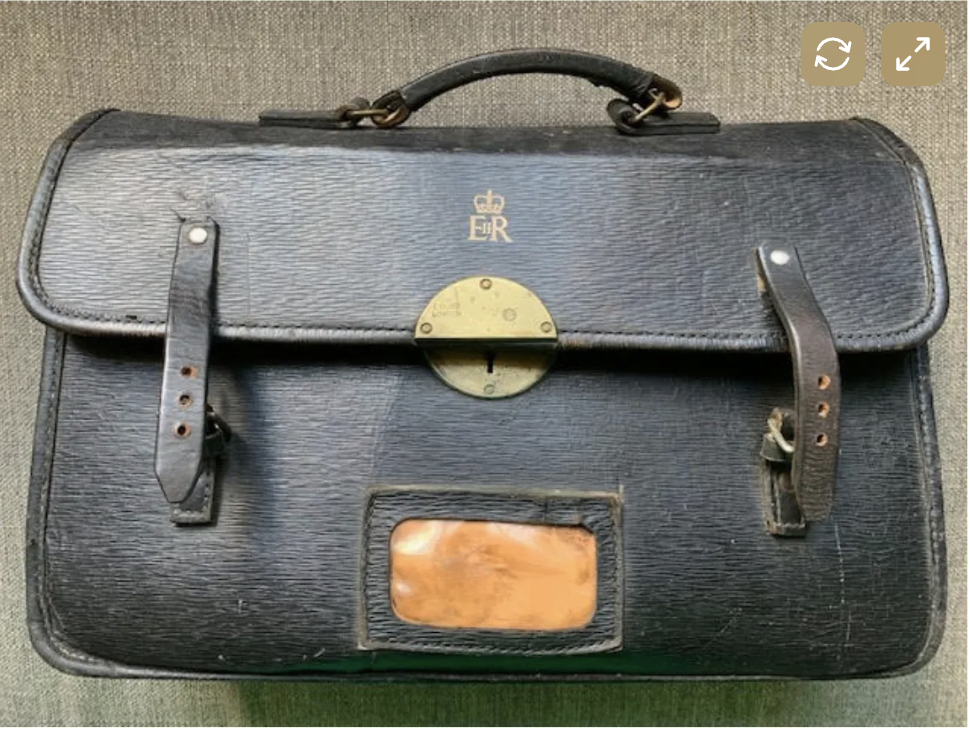
Jennie Hartley asked me whether I knew anything about the history of civil service briefcases - like this one that she had bought at an auction. I didn’t, but the wonderful online community certainly did. Here is what they told me:-
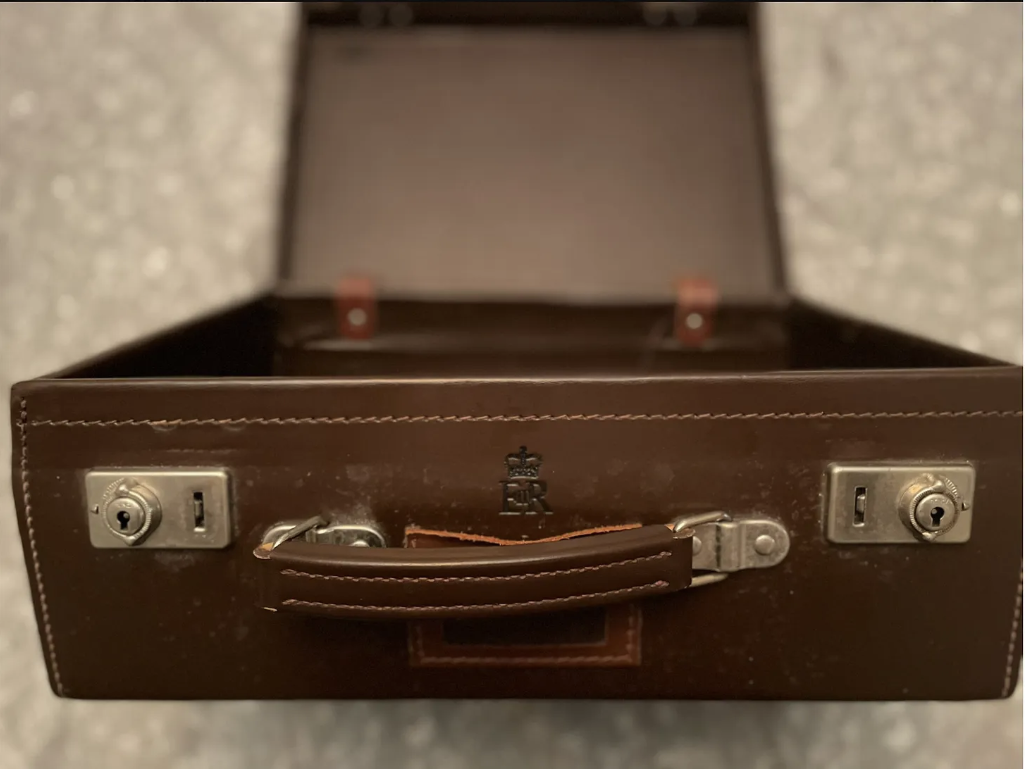
There were two basic designs. More senior staff were issued with brown leather rectangular cases like this one:
Others were given black leather or plastic briefcases such as the one bought by Jennie.
Both types of case were issued until around the end of the 1980s. William Rufus Bear told me that ‘They were discontinued because they made it obvious that you were CS and carrying official documents.’ He also added that, when his mother died, she had left her will and all the details required to deal with her estate all together in her old CS briefcase. Efficient to the last!
Tim Jones added that the Foreign Office stopped issuing them because terrorists, too, might use them to identify diplomats.
Laurence Price remembers that ‘there was one very last black leather one kicking around HMRC solicitor's office c.2006-7, when I was a very junior legal contractor. It had the silver crown underneath the flap, so you could discreetly flash it to security guards at court... Oh, the power!’
Colin Talbot told me that a lot of such leather goods were made in Remploy factories that provided employment for disabled former military.
The cases were issued to those who needed them, irrespective of rank.
Evelyn Cook recalls that her husband had one and resisted all efforts to surrender it for the subsequent floppy version. ‘He needed it to take papers off site - mostly Parliament. If you were in the House you needed to take stuff home after debates. This was in 1980’s and he was a Principal/Grade7.’
Others recalled that
I had one like that and had to use it when travelling to EU, UN and OECD overseas meetings when a mere Grade 7. I think it’s in the back of a cupboard at home still.
They were specified as the only means for carrying classified papers outside of the office. I recall I had one and it came with a job which had some especially sensitive content (I had to be PVd for the first time).
Brian Collins used one a lot. ‘Travelling from my institution outside London to meetings in London when carrying material at a certain level of classification. What that level was and I would hope still is is of course of itself sensitive.’
Malcolm Edwards remembers his dad using them when travelling alone in first class, with the whole compartment booked for him, Bath to Glasgow. ‘It was the docs, not him, that merited first class. Different times! ‘ (I suspect that Edwards senior was probably carrying warship design information from MoD Bath to Yarrows on Clydeside.)
They were pretty much a standard item in the Employment Department and the Department of Social Security (later DHSS and DWP) for HEOs and above in 70s. EOs could get them if their role - such as a “Visiting Officer” required it. They carried case notes for all those being visited that day plus extra forms, leaflets & pens.
Linda Tomlinson recalls 'the bundle of dogeared case papers stuffed into my official issue black plastic briefcase! Endless applications for 'exceptional needs payments' for everything from frying pans to Doc Martin work boots! Never a dull day as a DHSS VO!'
Maura also had one. 'I was a "visiting officer" & worked in some of the rougher areas of a city centre. Carrying it made my shoulders ache. I hated it!'
And another ex-colleague remembers that 'Ours was a rural area so few houses had numbers or names. VO notes to 'take lane to left of strawberry field' were especially helpful in December. Happy days though.'
Phil Lowthian remembers using one in 1981 to deliver a summons for unemployment benefit fraud (‘working and signing’) to a person in High Legh Cheshire.
'Turned up at 6pm. Raining. Under (mistaken) impression we had actually to touch the person with the summons. Knocked on the door … no reply. Letter box opened. I fling the summons into letter box and considered it served.
Walking away up the path. Letter box opened again. Said summons flung back at us…. Left it lying in puddle on path way. Closed up briefcase and went to pub.
Magistrates Court a few weeks later: Will he or won’t he turn up? …… he did. Promising career not derailed at first hurdle….
Btw - mine was a plastic version. I was a CO (Clerical Officer) at the time. It was made clear to me that it was not my personal property and I only had it on loan and very specifically for business purposes only . I promise I didn’t carry my butties in it….
Finally, here are some other rather delicious memories:
David McLean remembers that ‘In ye olden Inland Revenue it was briefcase when you got Principal (G7), hatstand when you got your Senior Principal (G6). When I got onto the fast stream as an internal candidate, my tax office clubbed together and bought me a briefcase.’
Another ex-Revenue colleague recalled that ‘at the City of London Collection in the 80's the head honchos had a briefcase with OHMS stamped on them. It was of course coveted by us juniors into 'Only Holds My Sandwiches'‘.
Louise Holden was 'offered an official briefcase on passing my Inspector of Taxes exams in the 90s, but as I recall I took the less official but more practical shoulder bag option instead.'
Andy Jack recalls that "the rest of us had to beg to borrow one when send to deliver urgent stuff if the outdoor messengers were too busy (they had them too)".
Wilma Harper remembers coming back from Brussels and discovering the leather one was the exact size for a couple of bottles of duty free gin.
Ruth Hyde's dad had one in the 60s and 70s. "We children used to call it “ piggy face” because of the way the round brass clasp in the middle looked like a pig’s snout!"
Civil Service Hostels
I recently shared some bits and pieces of civil service history and asked whether anyone had information about civil service hostels. I am very grateful to the following three respondents. Their stories will ring bells with older readers, and possibly astonish younger ones.
Mandy Mayer reported that she lived in a hostel when she first came down to London having taken the entrance exam in Liverpool.
"It was in a big old stucco house in Kensington, I think. I remember it as very basic. I shared a room with one or more others. I can't remember if they offered any services like meals or a kitchen but I presume the latter at least. I do remember the mice - I had never lived anywhere with mice before and when you turned the lights off, you could hear their tiny feet scuttling across the floor!
I didn't stay long as a girl in the Office of Fair Trading (my first job) found me a room in Ealing.
Howard Ewing kindly sent me these delicious memories:
"When I joined the civil service in the mid-1970s, I did so as a means of spending a year in London before taking up my place at University. I didn't really give much thought to accommodation and was happy to be assigned a place at a civil service hostel. These were run by the London Hostels Association and were reserved primarily for civil servants working in Central London.
My hostel was Leinster House, Bayswater. Nearby was another hostel at Lancaster Gate. And across the park was Gloucester Road Hostel. Leinster House was male only; Gloucester Road was women only; and, I think, Lancaster Gate was mixed. The only other hostel I remember was at Highbury Fields, which seemed a long way from the action in Central London.
The hostels were pretty basic and consisted of rooms sleeping four, three, two, or one. Most people started off in a four-person room unless they were over 21 when they had to be in one of the others. The rent, which I can't remember (was it about £6 a week?), was based on occupancy and included breakfast and dinner (they probably called it supper). They provided lunch on Saturdays and Sundays, with a cold supper on the latter, for, I think, an extra charge.
As well as beds, the rooms included a wash hand basin. You can guess what one of the key rules was about use of the basins. Each week, a clean sheet was provided. The drill was to replace the bottom sheet with the top sheet and use the clean one as the new top sheet. This was then repeated weekly. The sheets generally had seen better days and many had stitch repairs. The bedding was completed by some fairly scratchy blankets, some of which carried “War Office” logos. Unsurprisingly, not much bedding was stolen when people moved out of the hostel.
The food was dire, particularly the cold supper on Sundays. It often comprised a sardine covered in sauce, which had spilled over the meagre salad served with it. Despite the food being included in rent, many of us chose to eat out. Before you get grand ideas, that often consisted of a steak pie, a pint of milk, and a lump of cheese from a corner shop and eaten in Kensington Gardens or Hyde Park.
The social life of the hostel mainly took part in The Mitre in Craven Terrace. It was a listed building and was used for filming a Guinness advert in the early 1970s. It had a cellar bar, which on reflection was more like a youth club given the age of the clientele, where residents of both Leinster House and Lancaster Gate mixed.
Activities in the hostel included table tennis and a TV room. A black and white set was provided, but this was upgraded to a colour TV with residents paying the difference through a weekly subscription. This was collected by someone sitting in the hallway on a Friday to catch people returning from work. Non-payers were then hunted down.
Most hostels had football teams and we played in a league each Sunday at Wormwood Scrubs. There was also a knock-out cup and an annual seven-a-side tournament in Regents Park. The most competitive thing about the Leinster House football team was trying to get a side together – many people hid in the hostel on a Sunday morning, seeking to avoid the drudgery of getting to Wormwood Scrubs and playing on a cold & muddy pitch. We played in black and white striped strips because the team organiser was a Geordie.
The hostels were run by a Warden and an Assistant Warden, who lived in. Tales of their gruffness was legendary. They were inevitably women. And one of their roles was to ensure that residents under the age of 18 returned to the hostel by 10pm. This was not an easy task and sometimes they lay in wait after 10pm to catch anyone who broke the curfew, or tried to sneak a member of the opposite sex to their room. How that worked when sharing with three others was a mystery to me.
However, I did return one evening to find my cousin tucked up in a spare bed in my room. He had come to visit me on a whim. One of my room mates answered the door and invited him in to wait on me. Because I was late, he was then offered a bed for the night by my roommate. This put me in a difficult position as any overnight guests, of either gender, were forbidden. I could have been expelled. The following morning, I sneaked my cousin out of the laundry window. He then rang the bell, which was answered by the Warden who called me to let me know that I had a visitor.
One of the great advantages of the hostels, apart from providing cheap accommodation in Central London, was the opportunity to meet other civil servants of a similar age. There was no-one else in my hostel who worked in the same Department as me. I met people from a wide variety of departments – Cabinet Office, Environment, HM C&E, Transport, Home Office, the Post Office, Trade & Industry, and so on. I even met someone who pretended to be a civil servant in order to get a place in the hostel. I also met people from all corners of Great Britain – Skye, Glasgow, Swansea, Somerset, Bristol, Manchester, Canterbury and many others; but no-one from Northern Ireland. Presumably they were in the Northern Ireland Civil Service.
I am still friends with someone I met on my first day in the hostel. Indeed, he and I went back for a nostalgic pint in The Mitre and a look at Leinster House, which is still a hostel, just before the pandemic.
I moved out of the hostel about year after I moved in, quite forgetting about my University place. I was having too much fun in London. Six of us, all former Leinster House residents, rented a flat in Shepherds Bush.
Were the civil service hostels a good idea? In short, a resounding yes. They set up young civil servants with accommodation in London and provided them with a support network. They opened my eyes to the civil service beyond my parent Department and gave me at least one friend for life. I did stay friends with my former Shepherds Bush flatmates for some time but, as often happens, lost touch with them over the years. The friend I mentioned and I attended the funeral of one of them about five years ago.
I was surprised to learn that the LHA still exists and continues to provide cheap Central London accommodation for young people, albeit not mainly reserved for civil servants.
The LHA was set up in 1940 to provide hostels for those made homeless because of the blitz. By the end of 1942 there were 33 hostels housing some 700 people, many of whom had been brought to London for job roles created by the war. By the 1950s the number of hostels had been reduced, and the bulk of the residents were young people recruited in the provinces for work in Government departments. This continued to be the situation until the seventies, by which time there were 17 hostels.
Today, LHA is a charity governed by a voluntary Board of Trustees. They now have 13 large hostels where they cater for all young people in need of affordable accommodation looking to work or study in London[1].
I have no idea why the civil service stopped, as it appears to have done, funnelling people towards these hostels. Certainly, in my later career, including a spell in HR, I was not aware of any civil servants staying in an LHA hostel.
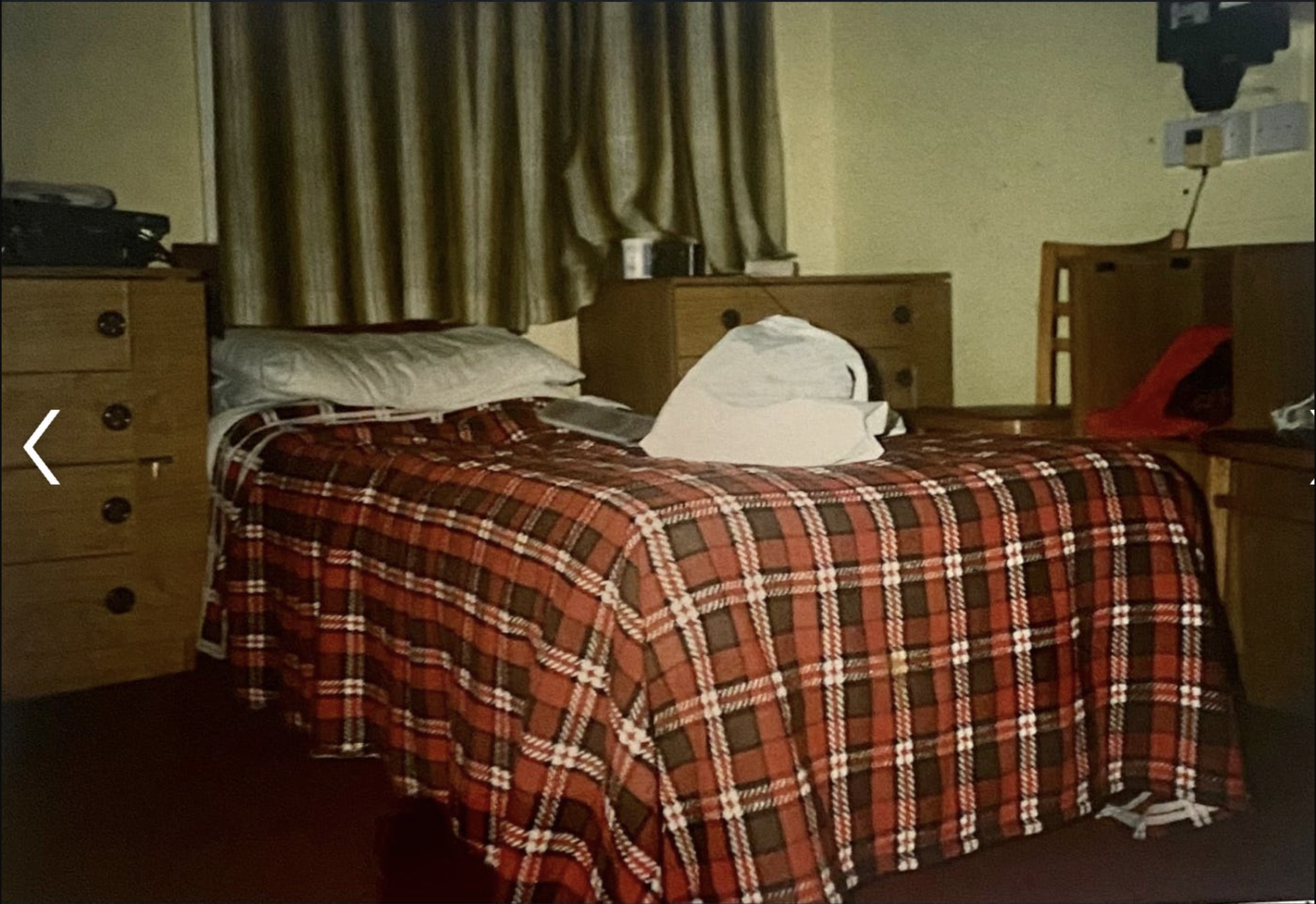
Sir Peter Wanless told me that he began his civil service career as an EO, living in a hostel in Broadhurst Gardens, off Finchley Road ...
"... sharing a room with two Irish blokes who were working on a road scheme. It was a pretty disgusting place (borderline scary) but the people at work seemed nice so I stuck with it. You got breakfast included which was cereal with powdered milk that tasted of water.
I was a fish so far out of water that I’m still amazed at how my parents just left me to sort a move to the big city completely to myself.
Peter even kept a photo of his bed and furniture:-
And now a postscript:
I recently wrote about civil service briefcases and civil service hostels. Linda S (@VATskills) brought the two together in this brilliant recollection:
I had CS accommodation in a female hostel near Queensway where there was a kerb crawling problem. Holding up briefcase, badge outwards, at an offender’s car window was a quite effective deterrent.
Internal Envelopes
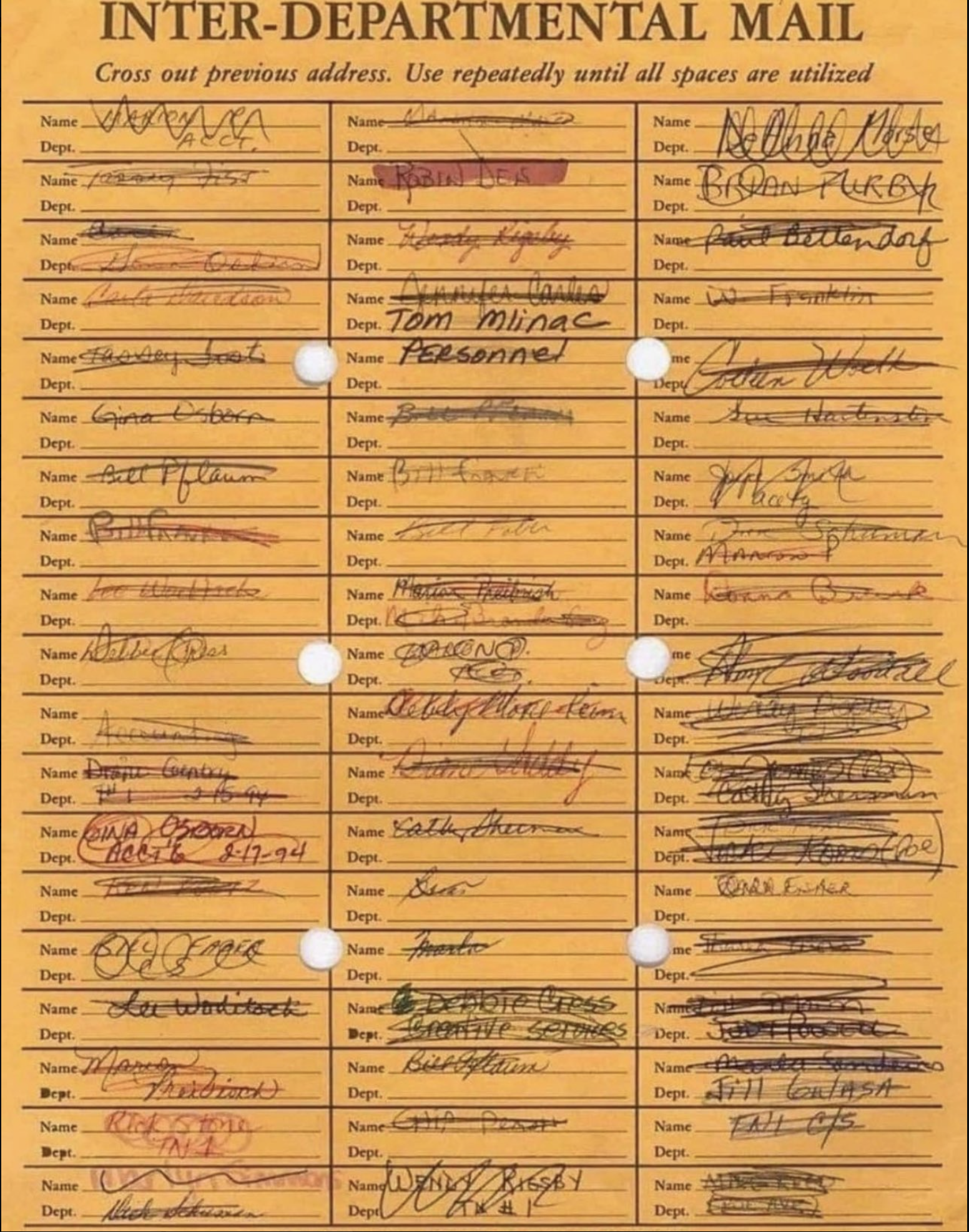
Internal envelopes such as this one saved paper as they facilitated the movement of documents around departments - until they were superseded by email.
Civil Service Script
Civil Service Script (aka Civil Service Hand) was a form of handwriting which was once taught in many schools, particularly in Scotland. But it was not, as far as I can tell, ever formally recognised (or required) by the civil service itself. This link leads to further information. And the introduction to this Scottish document is interesting.
Clark’s College
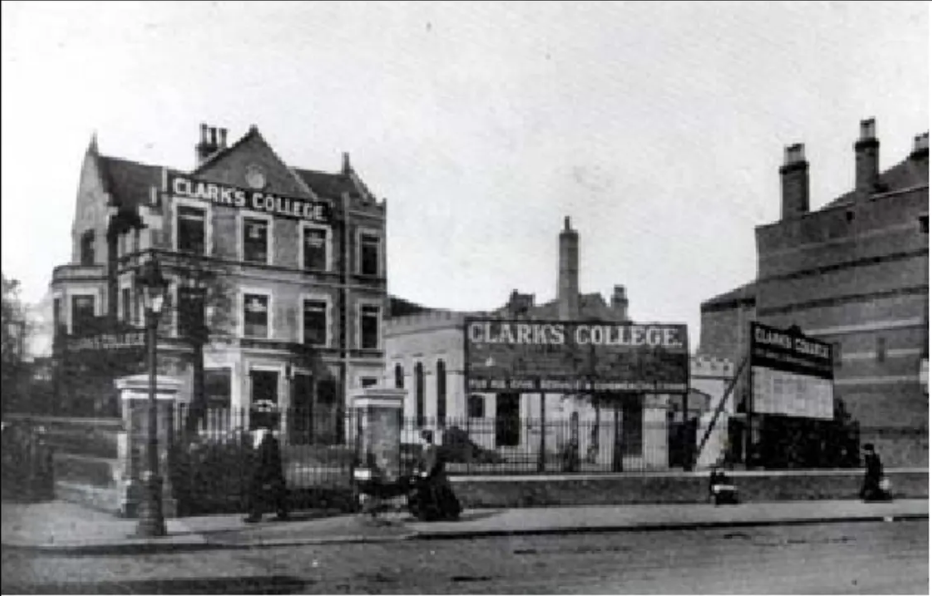
Continuing the education theme, I am grateful to Mandy Mayer for drawing my attention to Clark’s College which originally focussed on helping candidates pass the civil service exams, including through correspondence courses, an early (and superior?) form of distance learning. This link leads to a 1980 potted history of the main college in Chancery Lane but it appears from the side bar that there were eventually many other franchised Clark’s Colleges all around the South East of England, plus Cardiff, Leicester and Southampton. If you read the detailed comments, it appears that the teaching in these franchises was of variable quality.
One Clark’s Bromley ‘old boy’ was Admiral Raymond Lygo who became Vice Chief of the Naval Staff and then Chief Executive of British Aerospace.
Here is a photo of the Brixton franchise on the corner of Brixton Hill and Lambert Road:
Some earlier civil service history is here.